日本語 Availability

Ureshino Onsen: its water and history

Ureshino Onsen is known as one of Japan's three best hot springs for beautiful skin. LAPPY has no hot spring of its own, but you can cross the river and walk to the public bath, Siebold-no-Yu.

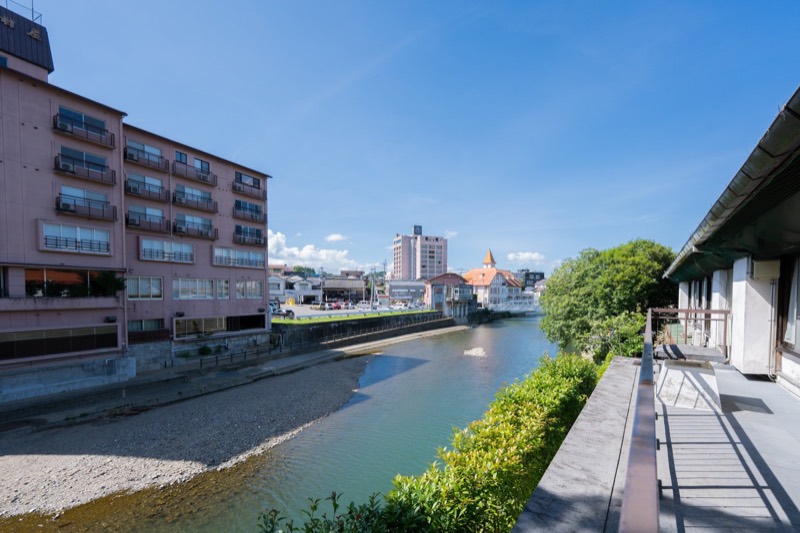
The Ureshino River under a blue sky, with hot-spring town buildings along its banks
The Ureshino River and the hot-spring town.

Where to bathe in town (map)

This map shows the hot springs you can use without staying the night, and the free foot baths. Tap a number to jump to the list below.

  • Hot spring (day bathing)
  • Foot bath (free)
  • Our guesthouse (GUESTHOUSE LAPPY)

This map shows rough positions only. Scale and directions are not exact. Based on maps by the Geospatial Information Authority of Japan (GSI Tiles).You can scroll the map sideways.

For photos of the baths and full details, please see each official website. Prices and hours were checked on each official website on 21 October 2026. They can change, so please check before you go.

  1. Siebold-no-Yu public bath公衆浴場「シーボルトの湯」No.1・Public bath

    A public bath run by Ureshino City. You can cross the river and walk there from LAPPY.
    Price: Adults (junior high school age to 69) 450 yen, 70 and over 340 yen, elementary school children 220 yen
    Hours: 6:00–22:00 (last entry 21:30)
    Closed: 3rd Wednesday of each month (next day if a holiday)
    Roof and wall repairs until around 15 December 2026. The bath stays open during the work.

  2. Yuyu Hiroba (Siebold's Foot Bath)湯遊広場(シーボルトのあし湯)No.2・Foot bath, free

    Open 24 hours (the building lights go off at 3:00 a.m.).

  3. Yushuku Hiroba湯宿広場No.3・Foot bath and foot steam bath, free

    The foot bath is open 8:00–23:00 and the steam bath 9:00–20:00.

  4. Yuttsura Hiroba湯っつら広場No.4・Foot bath and hand bath, free

    Open 7:00–23:00. There is also a shallow play bath for children.

  5. Hyakunen-no-Yu百年の湯No.5・Day-use hot spring

    Large baths, family baths, and a private cottage bath with a sauna.
    Price: Adults 590 yen (weekends and holidays 740 yen, peak days 790 yen) plus 100 yen bathing tax; children (age 3 to elementary school) 300 yen (350 / 400 yen)
    Hours: 9:00–22:00 (last entry 21:30, family baths 21:00)
    Closed: Closed one day a month (next: Wednesday 28 October and 25 November)

  6. Ooedo Onsen Monogatari Ureshinokan大江戸温泉物語 嬉野館No.6・Hotel (day bathing)

    Large baths you can use without booking.
    Price: Adults 750 yen (weekends and holidays 1,050 yen, peak days 1,250 yen); children 500 yen (peak days 590 yen); free under 3 (tax included)
    Hours: 7:00–10:00 and 15:00–24:00 (last entry 22:00), no booking needed
    Guests with tattoos can use the baths only if the tattoos are fully covered with the hotel's cover stickers (for a fee).

  7. Kisenkan嬉泉館No.7・Ryokan (visitor bathing)

    Indoor rock baths with 100% free-flowing water from its own source.
    Please check prices and hours on the official website.
    As a small inn, it sometimes declines or limits visitor bathing. Please call on the day.

  8. Ryokan Taishoya旅館 大正屋No.8・Ryokan (day bathing)

    A large bath in an open atrium space: men's on the 2nd floor, women's on the 3rd.
    Price: Adults 1,300 yen, elementary school children 600 yen, free for small children
    Hours: 12:00–23:00

  9. Shoen松園No.9・Ryokan (day bathing)

    A large bath by the river, and a private open-air family bath.
    Price: Adults 900 yen, elementary school children 450 yen
    Hours: 12:00–14:00
    Closed: Not available on Saturdays, Sundays and busy periods

  10. Ryokan Oomuraya旅館 大村屋No.10・Ryokan (day bathing)

    Large baths with free-flowing water; the men's bath is semi-open-air, facing the Ureshino River.
    Price: Adults 1,100 yen, children 550 yen, free for ages 0–3
    Hours: 15:00–22:00 (last entry 21:00)
    Entry may be refused while cleaning or when busy.

  11. Wataya Besso和多屋別荘No.11・Ryokan (day bathing)

    An open-air bath by the Ureshino River, and large baths with a sauna room for both men and women.
    Price: Adults 1,300 yen, elementary school children 700 yen, free for preschoolers (face towel and bath towel included)
    Hours: 14:00–21:00 (last entry 20:00)
    Closed: Opens at 17:30 on the 2nd and 4th Wednesday
    The Ureshino Onsen Tourism Association listing says that since June 2025 day bathing is on weekends and holidays only. Please call to check before you go.

  12. Chagokoro-no-Yado Warakuen茶心の宿 和楽園No.12・Ryokan (day bathing)

    An open-air "tea bath" steeped with Ureshino tea.
    Price: Adults 1,400 yen, elementary school children 700 yen
    Hours: 11:30–15:00 (last entry 14:00)
    Closed: Tuesdays (bath cleaning) and the day after closing days
    Guests with reservations come first, so you may be turned away at busy times.

  13. Shiibasanso "Shiiba-no-Yu"椎葉山荘「しいばの湯」No.13・Ryokan (day bathing)

    A large open-air bath beside a mountain stream.
    Price: Adults 1,300 yen, elementary school children 600 yen, free for small children
    Hours: 9:00–21:00
    5 minutes south of central Ureshino by car (Taishoya Group website).
    The Ureshino Onsen Tourism Association listing says it is closed for a while, so please call before you go.

  14. Ureshino Kodachi-no-Yuうれしの木立の湯No.14・Day-use private open-air baths

    A day-use facility with eight private open-air baths.
    Price: From 1,500 yen per person for 50 min (from 1,600 yen for some types)
    Hours: Weekdays 13:00–18:00 (last entry 17:00); weekends and holidays 10:30–21:30 (last entry 20:00)
    Closed: Thursdays (open on holidays)
    The baths and washing areas are outdoors, so rain and cold weather can be inconvenient.

Locations: "Ureshino Onsen area map" by the Ureshino Onsen Tourism Association and others (as of April 2026). Prices and hours: each official website (Ureshino City website for Siebold-no-Yu and the foot baths).

The water of Ureshino Onsen

Ureshino Onsen is a hot-spring town along the Ureshino River in Ureshino City, Saga Prefecture.

According to Ureshino City, the water is mildly alkaline, between pH 7 and 8, and is known for its smooth, silky feel.

At the public bath Siebold-no-Yu, the water is classified as a sodium bicarbonate and chloride spring.

The city presents Ureshino Onsen as one of Japan's three best hot springs for beautiful skin. The town also has Toyotamahime Shrine, dedicated to Toyotamahime, who is regarded as a goddess of beautiful skin.

The water type and its listed benefits can differ between sources and baths, so please check the notice at the bath you visit.

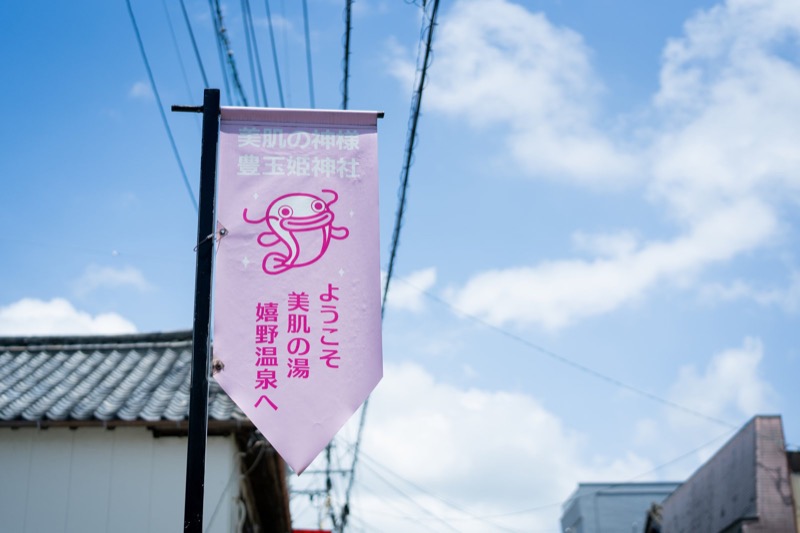
A pink banner in the hot-spring town reading "Welcome to Ureshino Onsen, the hot spring for beautiful skin"
Banners for "the hot spring for beautiful skin" line the town.

The history of Ureshino Onsen

Ureshino Onsen appears in an 8th-century record, and Ureshino City describes its history as more than 1,300 years long.

  1. 8th century

    Recorded in the Hizen no Kuni Fudoki

    The Hizen no Kuni Fudoki, a record of the province written in the Nara period, says there is a hot spring on the east bank of the Shiota River that cures people's illnesses. It is thought to describe Ureshino Onsen.

  2. Legend

    Empress Jingu and the name "Ureshino"

    Legend says Empress Jingu, returning from battle, saw her soldiers' wounds healed by the hot spring and cried out "Ureshii no!" ("How happy I am!"). This is said to be the origin of the name.

  3. Edo period

    A post town on the Nagasaki Highway

    Ureshino prospered as a post town on the Nagasaki Highway between Nagasaki and Kokura. Because sugar was carried along it from Nagasaki, the road is also called the "Sugar Road".

  4. 1690

    Kaempfer passes through

    The German physician Engelbert Kaempfer travelled the Nagasaki Highway to Ureshino and wrote that tea gardens lined the road.

  5. 1826

    Siebold passes through

    Philipp Franz von Siebold, a physician and naturalist, passed through Ureshino on the Nagasaki Highway from Nagasaki to Kokura and left notes about its hot springs.

  6. Taisho period

    A Western-style public bath is built

    A Gothic-style Western public bathhouse was built in the hot-spring town.

  7. 2000–2021

    Three free foot baths open

    Siebold's Foot Bath opened in 2000, Yushuku Hiroba with its foot steam bath in 2012, and Yuttsura Hiroba in 2021.

  8. 2010

    Siebold-no-Yu opens

    Siebold-no-Yu, recreating the Taisho-era bathhouse, opened in April 2010.

  9. 2022

    Ureshino-Onsen Station opens

    On 23 September 2022, the Nishi-Kyushu Shinkansen opened, and Ureshino City, which had no railway until then, gained Ureshino-Onsen Station.

A hot spring in an ancient record

The Hizen no Kuni Fudoki is a Nara-period record of Hizen Province, today's Saga and Nagasaki prefectures.

In its entry on the Shiota River, one line says there is a hot spring on the east bank that cures people's illnesses.

From this line, Ureshino Onsen is thought to have been known as a healing spring since ancient times.

Empress Jingu and the crane

Ureshino City tells the legend behind the town's name like this.

On her way back from battle, Empress Jingu saw a tired crane soak its wings in a river and fly away refreshed.

When she had her soldiers bathe in the river, hot water rising from the riverbed healed their wounds.

Delighted, the empress said "Ureshii no!", and the place came to be called Ureshino, or so the story goes.

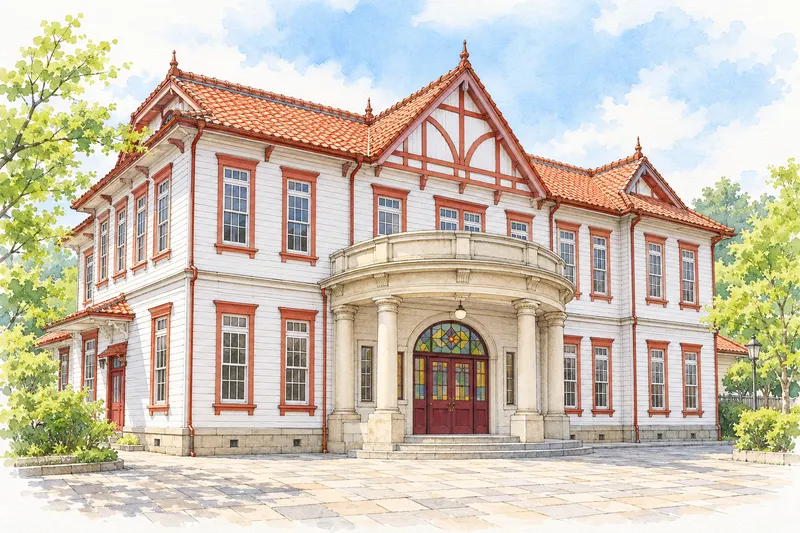
Watercolor illustration of Siebold-no-Yu: a Western-style building with white clapboard walls, an orange tiled roof and reddish-brown window frames
Siebold-no-Yu, recreating the Taisho-era building (illustration).

A post town and a bath for travellers

In the Edo period, Ureshino was Ureshino-juku, a post town on the Nagasaki Highway.

Travellers on the road are said to have stopped here and soaked away the tiredness of the journey.

According to Ureshino City, there were more than twice as many hot-spring inns then as there are today.

Zuikoji Temple in the hot-spring town served as the official lodging for Nagasaki magistrates and feudal lords.

Onsen yudofu, the town's famous tofu simmered in hot-spring water, is said to have begun when people found this way of cooking tofu in the Edo period.

Siebold and the waters of Ureshino

Siebold was a German physician and naturalist who came to Japan in 1823.

In 1826, travelling the Nagasaki Highway, he passed through Ureshino and recorded notes on its hot springs.

Ureshino City describes him as one of the first people to collect data on the waters of Ureshino.

The public bath Siebold-no-Yu and Siebold's Foot Bath are both named after him.

Siebold-no-Yu, recreating a Taisho-era bathhouse

Siebold-no-Yu is a two-storey wooden public bath across the river from Ureshino Onsen Park.

It is a Gothic-style building with the romantic atmosphere of the Taisho era, and its pointed orange roof is easy to spot.

Recreating the public bathhouse built in the Taisho period, it opened as Siebold-no-Yu in April 2010.

Every year on 1 April, its opening anniversary, the large baths are free.

A place to recover

The poet Saito Mokichi came to Ureshino to recover from illness, and is said to have regained his health here.

In the Iwayagawachi area of Ureshino, a stone monument carries the tanka poem he wrote in Ureshino.

A hot-spring town with a Shinkansen station

On 23 September 2022, the Takeo-Onsen to Nagasaki section of the Nishi-Kyushu Shinkansen opened, giving Ureshino City its first railway station, Ureshino-Onsen Station.

From Ureshino-Onsen Station to LAPPY is 5 minutes by car. Cars cannot reach the guesthouse itself, so you will get out nearby and walk.

Sources: Ureshino City website (tourism, multilingual commentary and tea pages), Saga Prefecture website (history of the Nishi-Kyushu route), Nihon Rekishi Chimei Taikei and Nipponica encyclopedias (via Kotobank), and the Ureshino City sightseeing map. Legends are presented as stories that have been handed down.
The public bath and foot baths in town

These are the public bath and foot baths in the hot-spring town, within walking distance of LAPPY. Prices and hours can change, so please check each official page before you go. Inns that take day bathers are in the map and list above.

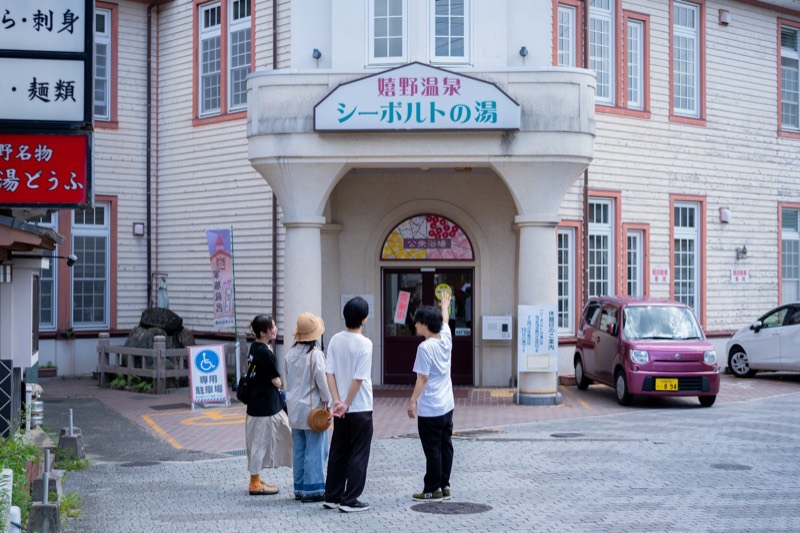
Four people standing in front of a Western-style building with a sign reading "Ureshino Onsen Siebold-no-Yu"

Public bath, private bath

Siebold-no-Yu

A public bath run by Ureshino City, with large baths and a private bath. You can cross the river and walk there from LAPPY.

Water
Sodium bicarbonate and chloride spring
Hours
6:00–22:00 (last entry 21:30)
Closed
3rd Wednesday of each month (next day if a holiday)
Large baths
Adults (junior high school age to 69) 450 yen, elementary school children 220 yen
Private bath
2,500 yen for 50 minutes (plus 100 yen bathing tax per adult)
Towels
Bring your own.

As of October 2026, from the Ureshino City website. The roof and outer walls are being repaired from 27 August to 15 December 2026 (planned), but the bath stays open as usual.

Siebold-no-Yu (Ureshino City, in Japanese)

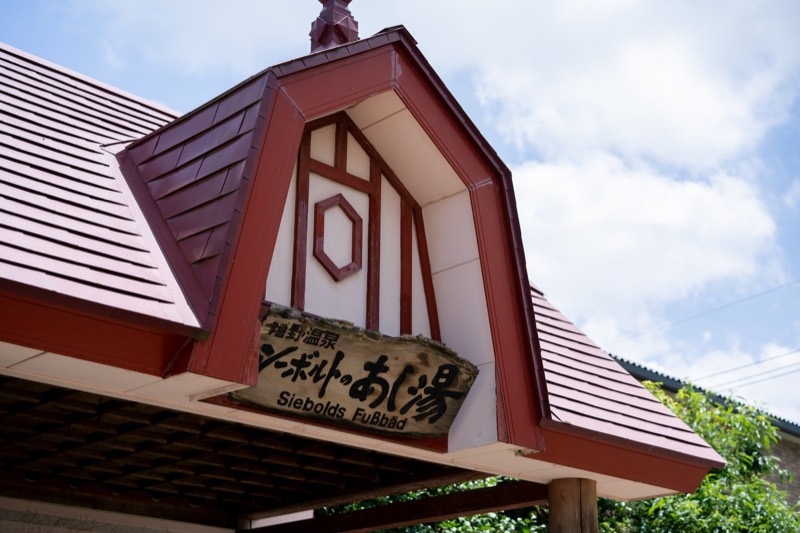
The building of Siebold's Foot Bath with its red triangular roof

Foot bath, free

Yuyu Hiroba (Siebold's Foot Bath)

This free foot bath is named after Siebold, who stopped at Ureshino Onsen in the Edo period.

It is open 24 hours (the building lights go off at 3:00).

Foot bath and foot steam bath, free

Yushuku Hiroba

A free square with a foot bath and a foot steam bath, which is rare in Japan.

The steam bath seats seven. Put both feet into the holes, rest the box on your knees, and steam for about 10 to 15 minutes.

The foot bath is open 8:00–23:00 and the steam bath 9:00–20:00.

Foot bath and hand bath, free

Yuttsura Hiroba

A free square with a foot bath, a hand bath and a shallow play bath for children. The foot bath has tables.

"Yuttsura" is a Saga dialect word meaning "slow and relaxed". It is open 7:00–23:00.

Foot bath hours are from the Ureshino City website as of October 2026. On Wednesday mornings they may be closed for cleaning. You can buy a towel for your feet at nearby shops or at Siebold-no-Yu.

Ureshino Onsen foot baths (Ureshino City, in Japanese)

Hot spring tofu, tea and bathing etiquette

Onsen yudofu (hot spring tofu)

Ureshino's famous onsen yudofu is tofu simmered in the town's hot-spring water.

The mildly alkaline water brings out the flavor of the tofu and makes it soft enough to melt in your mouth.

Ureshino tea

Ureshino is a tea-growing area as well as a hot-spring town.

According to Ureshino City, Ureshino tea won first place at the 80th National Tea Fair, its fourth year in a row at the top.

Restaurants for yudofu and shops for tea are on our page about walking around Ureshino.

Walking Ureshino

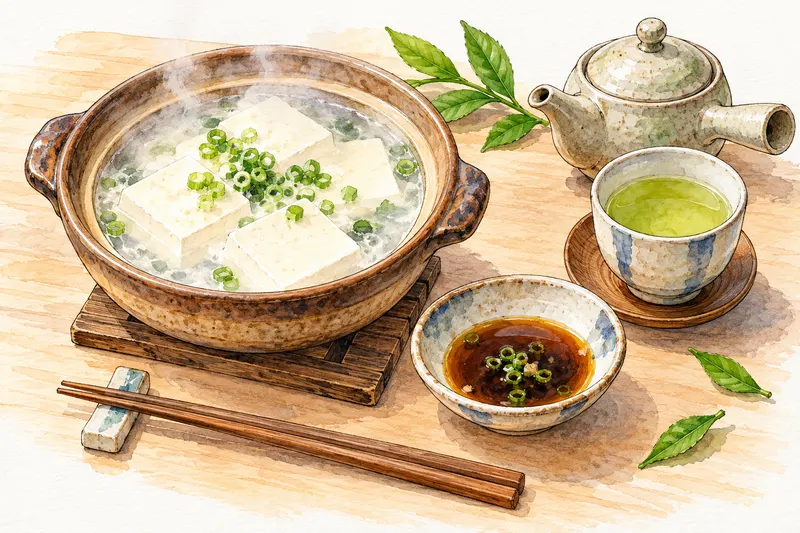
Watercolor illustration of hot spring tofu in a clay pot, with a cup of green tea and a teapot
Onsen yudofu and Ureshino tea (illustration).

How to use a Japanese hot spring

In a Japanese hot spring, everyone shares the same bath, so there are a few rules.

  • Before getting into the bath, rinse your body with a scoop of water or wash at the washing area.
  • Keep your towel out of the bath water.
  • If you have long hair, tie it up so it does not touch the water.
  • After using the washing area, put the stool and bucket back where they were.
  • Before going back to the changing room, wipe off the water lightly with your towel.
  • Please do not bathe after drinking alcohol or when you feel unwell.

Please check each bath's own rules on the signs at the entrance and in the changing room.

LAPPY and the hot springs

There is no hot spring bath at LAPPY. The one shower room and the bathroom are shared.

On Instagram, we explained why we have no hot spring bath (translated from Japanese):

"It's because there are so many hot springs within easy walking distance, and because we'd love you to walk around the town of Ureshino."

For a hot spring, please use a public bath such as Siebold-no-Yu, which you can walk to from LAPPY.

Shoes are not allowed inside, and you are free to use the outdoor slippers when you go out.

Towels (rental), toothbrushes and yukata robes are available for a fee. At Siebold-no-Yu, you need to bring your own towel.

Ask us how to get there, or which bath suits your day.

Walking Ureshino

Access and parking

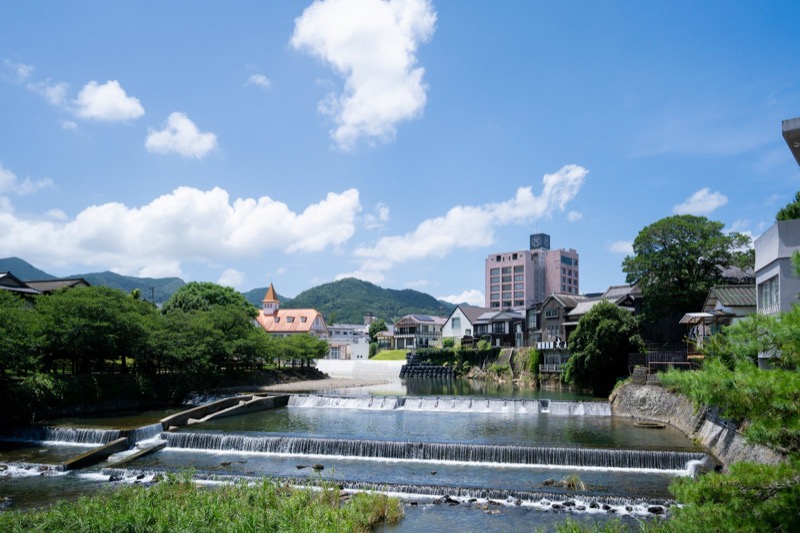
A path along the Ureshino River, with the hot-spring town across the water
The riverside path near LAPPY.

Check availability and book

Check availability and book on our official booking page. Rates appear once you choose your dates and number of guests.

Check availability

The booking page (an external site) opens in a new tab.

Coming by car?

Cars cannot reach the guesthouse. Please park at the Times Siebold parking lot nearby and walk. Access and parking